- How much do Google Ads cost for home-services contractors?
- What is the average cost per lead on Google Ads?
- Why do Google Ads cost more for some trades than others?
- What actually drives your cost per click up or down?
- What should a contractor actually spend per month?
- Is it worth paying for Google Ads?
- What are the hidden costs, management fees and wasted spend?
- FAQ
How much do Google Ads cost for home-services contractors?
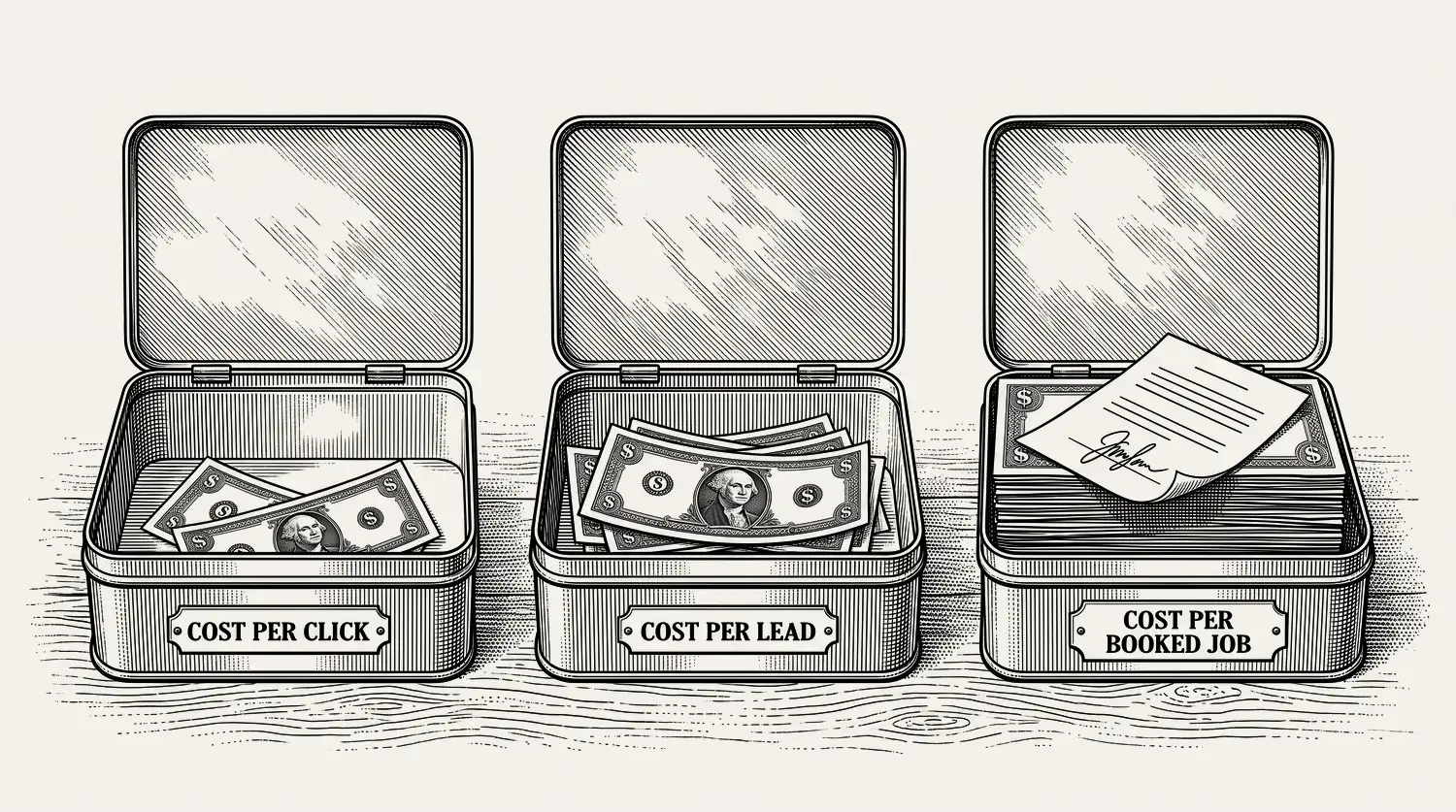
Google Ads costs land in three layers. A click can run from a few dollars to over ten. A lead, which is a real call or form fill, costs more because not every click calls. And a booked job costs more again, because not every lead closes. Most guides stop at the click. Owners live on the booked job.
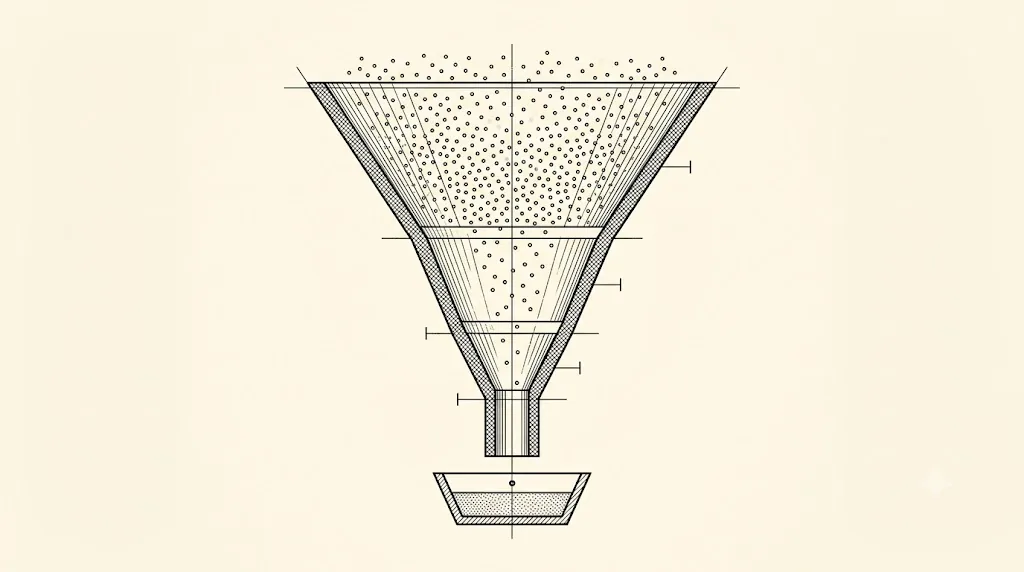
Here are real 2026 numbers for home services.
| Campaign or trade | Typical cost per lead | Source |
|---|---|---|
| Search ads (HVAC and plumbing, blended) | about $104 | SearchLight, Jan 2026, 816 contractors |
| Performance Max (same dataset) | about $72 | SearchLight, Jan 2026 |
| Roofing search (the high end) | $228.15 median | LocaliQ, 3,211 US campaigns |
One row in that table needs a warning. Performance Max shows the lowest lead cost, and that is not the bargain it seems. A lot of those cheap leads are people who already knew your name and would have called you anyway. It also runs on conversion data that a small local account has not built yet. So judge it on booked jobs, not on the lead price. That $72 figure gets taken apart properly in our Performance Max guide.
Now convert a lead to a booked job. Say a $104 lead books half the time. That booked job cost you about $208. If it books 60% of the time, about $173. The math is simple. Lead cost divided by close rate equals cost per booked job. Push your close rate up and every job gets cheaper without touching your bids. The rest of the numbers worth watching, and the ones worth ignoring, sit in their own guide.
One more clarification, because the search results blur it. Cost per click is not cost per thousand views. Views are counted separately and rarely matter for a service business. We answer the thousand-views question on its own.
What is the average cost per lead on Google Ads?
There is no single average. Cost per lead swings hard by trade, by campaign type, and by town. The honest answer is a range with the trade named, not one national number.
For HVAC and plumbing, blended cost per lead was $104 in January 2026, across 816 contractors and $14.9M in spend. Roofing search runs highest of any home-services category, at a $228.15 median. That is more than double the HVAC and plumbing figure, in the same year.
So ask for a number with your trade attached. A single average across all of home services hides the gap above. A window replacement lead and a burst-pipe lead do not cost the same, and they are not worth the same to you either.
Why do Google Ads cost more for some trades than others?
Three forces set the price. First, competition. When ten roofers bid on the same search, the auction price climbs. Second, how ready the searcher is to hire. An “emergency” or “near me” search is worth more because it books faster, so everyone bids up. Third, season. Storm work spikes demand overnight, and roofing and water-damage restoration both feel it in the same week. Agencies widely report storm events doubling or tripling costs per click, though that is reported, not measured.
That is why roofing costs land at the top of every table and a simple repair keyword costs less. The mechanics of the auction that sets these prices live in our how Google Ads works guide. Short version: you bid on searches, better ads pay less, and busy trades cost more. At those prices, a roofing account has to be judged on booked jobs rather than clicks.
What actually drives your cost per click up or down?
Your own cost per click is not fixed by your trade alone. You move it. Google prices each click on Ad Rank, which combines your bid with your ad quality. Raise the quality and you pay less for the same spot. That quality grade is your Quality Score, and it rewards ads and pages that match the search.
So two roofers in the same town can pay very different prices. The one whose “metal roof” ad points at a metal-roof page pays less than the one who sends every click to a homepage. The full lever is broken down in our Quality Score guide.
What should a contractor actually spend per month?
Enough to buy a real sample of leads, and no less. At $104 per lead, a $1,500 to $3,000 monthly budget buys roughly 15 to 30 leads. That is the floor where Google has enough data to learn and you have enough jobs to judge the account. Below it, results are luck in both directions.
Work it back from your own numbers, not a generic figure. Start with what a job is worth and your profit on it. Multiply profit by your close rate to get the most you can pay per lead. A $6,000 job at 40% profit is $2,400 in the bank. Close one lead in four and you can pay up to $600 a lead and still break even. Spend $150 and you are well ahead. A $250 drain clear cannot carry a $100 lead. A pipe reline barely notices one. That is why two plumbers in the same town can have opposite verdicts on the same ads. Our budget method and calculator walk this through step by step.
Is it worth paying for Google Ads?
Sometimes yes, sometimes no, and the honest version depends on your numbers. Google’s own estimate says every $1 in ad spend returns about $2 in profit from the ads alone. Google’s bigger $8 figure bundles in organic search value, so treat it as Google grading its own homework, not independent proof. The platform works. Whether it works for you is a different question.
It is worth it when three things are true. Your jobs are worth enough to carry the lead cost. Someone on your team answers the phone fast, in the hours your ads run. And you track which leads become booked jobs. It is not worth it when your budget is too small to gather data, your calls go to voicemail, or you do not know what a lead is worth. In those cases the money trains customers to call a faster competitor. Fix the leak first, then spend.
There is a fourth case where the answer is simply no, and we would rather say it than sell you something. If your crews are already booked out four weeks and you are turning work away, more leads do not help you. You do not have a lead problem. Spend the money on people or on raising your prices, and come back to ads when you have capacity to fill.
What are the hidden costs, management fees and wasted spend?
The click price is not the whole bill. Two costs hide behind it. Management is the first. An agency or freelancer charges to run the account, usually a monthly fee or a slice of spend. That can be worth it, but it is real money on top of the ads. If you are weighing that up, our page on what a managed Google Ads account should include sets out the work a fee is meant to cover.
Wasted spend is the bigger and quieter cost. Broad keywords with no negative list buy clicks from people who will never hire you. Job seekers, price shoppers, other trades’ customers. Every one of those clicks is billed. A tight negative keyword list stops most of it, and working out what else is broken finds the rest. The waste is usually larger than the fee.
If someone runs the account for you, ask two questions this month. What did we pay for that could never have booked a job? And what negative keywords did you add in the last thirty days? A good answer names real searches. A vague answer means nobody has looked.
Stop reading · start fixingSee where your pipeline is leaking.Free 15-minute Leak Finder. We pull up your numbers, name your biggest leak, and hand you a 90-day plan. No sales script, no hard close.Find My Google Ads LeaksFAQ
What is the average cost per click in home services? There is no single figure. Roofing sits at a $10.70 median cost per click, and other trades vary by town and season. Busy, high-intent searches cost more. Ask for a trade-and-metro number, not a national average.
How much do small businesses spend on Google Ads? Most local service businesses run between $1,500 and $5,000 a month. The right number is whatever buys a real sample of leads for your trade. At $104 per lead, $3,000 buys about 29 leads.
Why do Google Ads feel so expensive for contractors? Because lead resellers bid against you, and their unit economics can beat yours. They sell one lead to several contractors. The fix is not to outspend them. It is to track booked jobs so you bid on the clicks that actually close.
Do you pay per click or per lead on Google Ads? You pay per click. Google bills you when someone clicks the ad, not when they call or fill in a form. That is why your cost per lead is always higher than your cost per click. Only a share of clicks turn into a real lead.
How long until Google Ads pays off? Leads can arrive on day one. A stable, profitable cost per booked job usually takes about three months of data. The first stretch is a data-gathering exercise, not a verdict.


