- How do Google Ads work?
- How does the Google Ads auction work?
- What is Quality Score and why does it lower your cost?
- What is the pay-per-click model?
- Where do Google Ads actually show up?
- How do Google Ads work for beginners?
- How much do Google Ads "pay" per 1,000 views?
- What do Google Ads cost, and are they worth it?
- FAQ
How do Google Ads work?
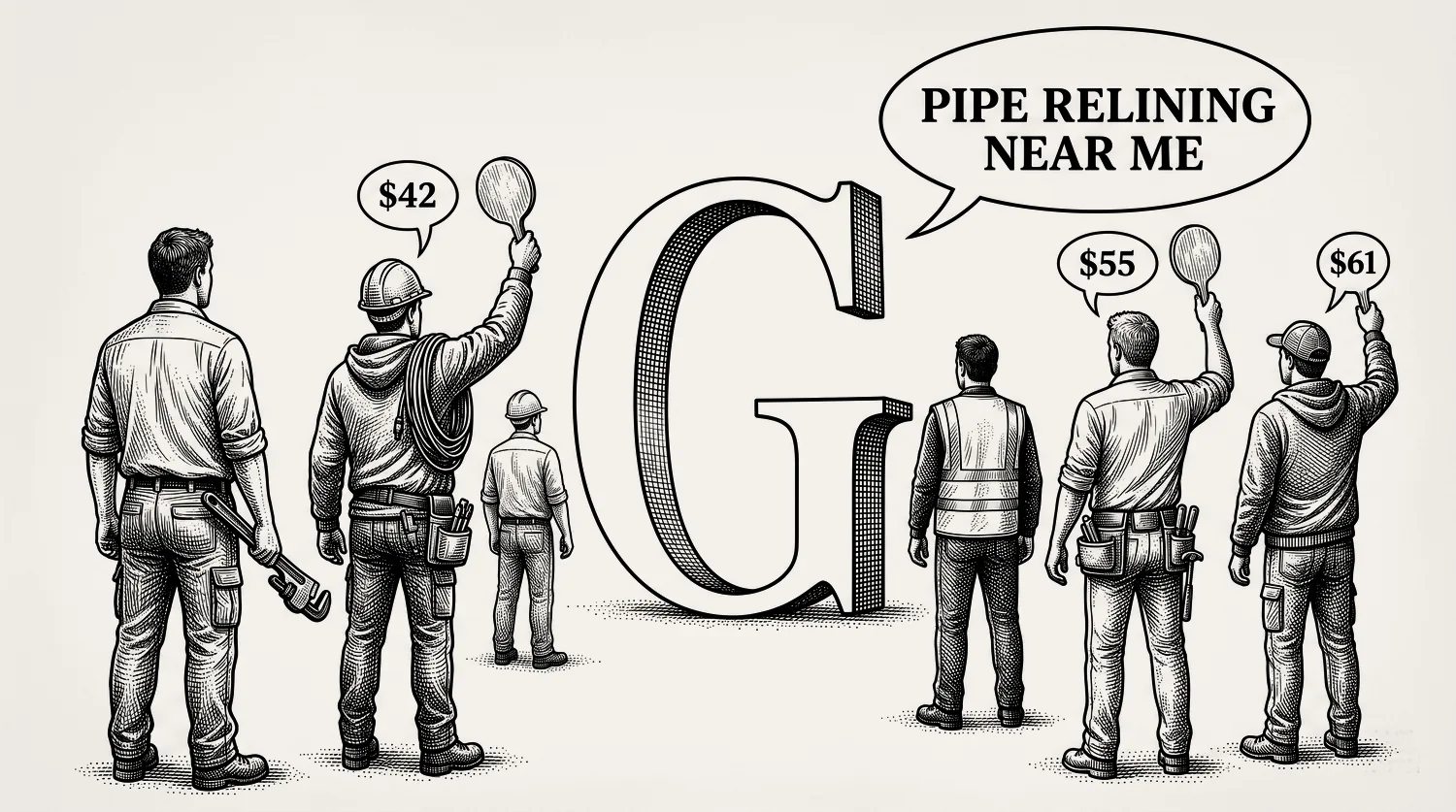
Google Ads is an auction for attention. You tell Google which searches you want to show up for. You set a bid. When someone searches, Google runs an instant auction and decides which ads to show and in what order. You pay only when someone clicks your ad. No click, no charge.
Three things decide if it works for you. The right searches. A good enough ad. A page that turns the click into a call. You control which searches trigger your ad with match types, covered in our guide to how tightly your keywords match. Get those three right and you show up right when a customer is ready to hire.
How does the Google Ads auction work?
Every search fires a fresh auction. Google gives each eligible ad an Ad Rank, then shows the highest first. Ad Rank is mostly your bid combined with your ad quality. Google also weighs the assets on your ad, like your phone number and extra links, plus the context of the search itself. So a modest bid with a strong ad can beat a big bid with a weak one. Money alone does not buy the top spot.
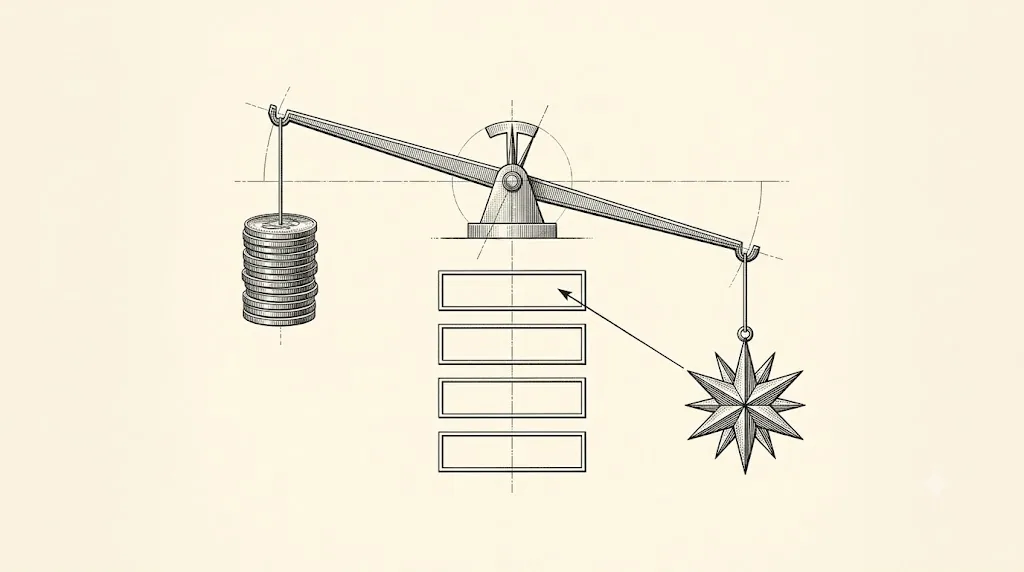
Here is the part owners like. You rarely pay your full bid. In Google’s own words, what you end up paying is often less than the most you said you would pay. Better ads pay less for the same spot. Quality is not fluff. It is a discount.
You do not have to set each bid by hand. Most contractor accounts now let Google set the bid in every auction, aiming at a target cost per booked job. Google calls this Smart Bidding, and it needs conversion tracking switched on to work.[3] More on tracking below.
So what do you actually do with this? Two things. Do not try to win the auction with money alone, because a better ad beats a bigger bid. And check that your ad, your keyword, and your landing page all talk about the same job. That is the part you control, and it is what the next section is about.
What is Quality Score and why does it lower your cost?
Quality Score is Google’s one-to-ten grade for how relevant your ad is. It rolls up three things. How likely people are to click your ad. How well your ad matches the search. And whether your landing page delivers what the ad promised. A higher score means a higher Ad Rank at the same bid.
This is the lever most contractors ignore. A basement waterproofing ad that points at your homepage scores low. The same ad pointing at a waterproofing page scores high. Same bid, cheaper clicks, better spot. Fix the match between search, ad, and page and your cost per click falls on its own. The full detail sits in our guide to why relevance lowers your click price.
If someone else runs your account, this is a fair thing to ask them. Pull up any three ads and ask which page each one sends people to. If the answer is “the homepage” three times, you are paying more per click than you need to. Keeping that match tight on every ad, every month, is most of what a well-run Google Ads account actually is.
What is the pay-per-click model?
Pay-per-click, often shortened to PPC, means you pay when someone clicks, not when your ad is seen. Ten thousand people can see your ad for free. You are charged only for the ones who click through. That is different from a billboard, where you pay for the space no matter who looks.
This gives you a budget dial. You set a daily budget and Google spends up to it. You can pause any day. The catch is that clicks are not jobs. Some clicks call and book. Some bounce. Some ring out because nobody was at the desk. The whole point of a good account is turning paid clicks into booked jobs your crew can fill, not just traffic.
Where do Google Ads actually show up?
Search ads show at the top of Google’s results, above the free listings. That is the format most contractors want. Your ad appears the second someone searches your service. Ads also show on Google Maps, which matters for “near me” jobs. Both catch people who already want the work done.
One thing has changed. Google now answers many searches with an AI Overview at the top of the page. Ads can show above that answer, below it, or inside it. Your normal Search campaign is what feeds those spots, so there is nothing extra to switch on. Google says where and when it happens varies by country, language, campaign type and the search itself.
Google runs other networks too. The Display network puts image ads on millions of other websites and apps. Video ads run on YouTube. Those reach people who are not searching yet, which is a different job from catching someone with a live problem. Which of these a home-services business should run is answered in our campaign types guide.
How do Google Ads work for beginners?
If you have never run a campaign, here is the whole thing in five plain steps.
That last step is the one beginners skip and regret. Tracking is what teaches Google which clicks are worth money. Skip it and you are paying Google to guess. Our guide to counting calls, forms and booked jobs properly walks through the setup.
There is a sixth step nobody puts in the list. Decide who answers the phone before you switch the ads on. Name the person, and cover the hours your ads run. You are about to pay ten dollars a click to make that phone ring. A missed call is that money gone, and the customer is already dialling the next contractor.
How much do Google Ads “pay” per 1,000 views?
This question mixes up two different people. If you searched “how much do Google Ads pay per 1,000 views,” you are probably thinking of AdSense. That is the program where a website owner earns money by showing other companies’ ads on their pages. They get paid per thousand views.
A contractor sits on the other side of that deal. You are the advertiser. You pay to show your ads. You do not earn from views. So there is no payout coming to you. There is a cost per click, and a cost per booked job. If you own a service business, those are the only two numbers that matter. Views are not one of them.
What do Google Ads cost, and are they worth it?
Short version. A click costs anywhere from a few dollars to over ten, depending on the trade and the town. Roofing sits at a $10.70 median cost per click. Blended cost per lead for HVAC and plumbing was $104 in January 2026. Your real number is cost per booked job, which depends on how often you close.
Is it worth it? Google’s own estimate says every $1 in ad spend returns about $2 in profit from the ads alone. Google’s bigger $8 figure adds organic search value, so read it as Google grading its own homework. The honest answer is that it works when your jobs are worth enough, your phone gets answered, and you have crew free to do the work. If you are already turning jobs away, ads are the wrong spend this month. Hire first. The full breakdown, trade by trade, lives in our cost guide.
Stop reading · start fixingSee where your pipeline is leaking.Free 15-minute Leak Finder. We pull up your numbers, name your biggest leak, and hand you a 90-day plan. No sales script, no hard close.Find My Google Ads LeaksFAQ
Is Google Ads the same as AdWords? Yes. AdWords was the old name. Google renamed it Google Ads in 2018. Same platform, same auction. If an article still says AdWords, it is just dated.
Is Google Ads different from Google AdSense? Yes, and they are opposites. With Google Ads you pay to show ads and win customers. With AdSense a website owner earns money by hosting ads. Contractors want Google Ads.
Is Google Ads or SEO better for a contractor? They do different jobs. Google Ads buys you the top spot today. SEO earns free clicks over months. Ads bring leads now while SEO builds. Most growing trades run both.
How long does it take Google Ads to work? Leads can come on day one. A steady cost per booked job takes longer. Plan on about three months of data before you judge the account. New campaigns need time to learn.
How does Google decide what I pay per click? Your Ad Rank sets your spot, and what you actually pay is usually less than your maximum bid. Raise your ad quality and you pay less for the same position.


