- Do you have enough conversions to run a Google Ads experiment?
- What is a Google Ads experiment, and what does it split?
- What do you do when your account is under the bar?
- How do you set up a custom experiment?
- How do you test AI Max before the September 2026 upgrade?
- How long should an experiment run, and how do you call the winner?
- What should you not use an experiment for?
- FAQ
Do you have enough conversions to run a Google Ads experiment?
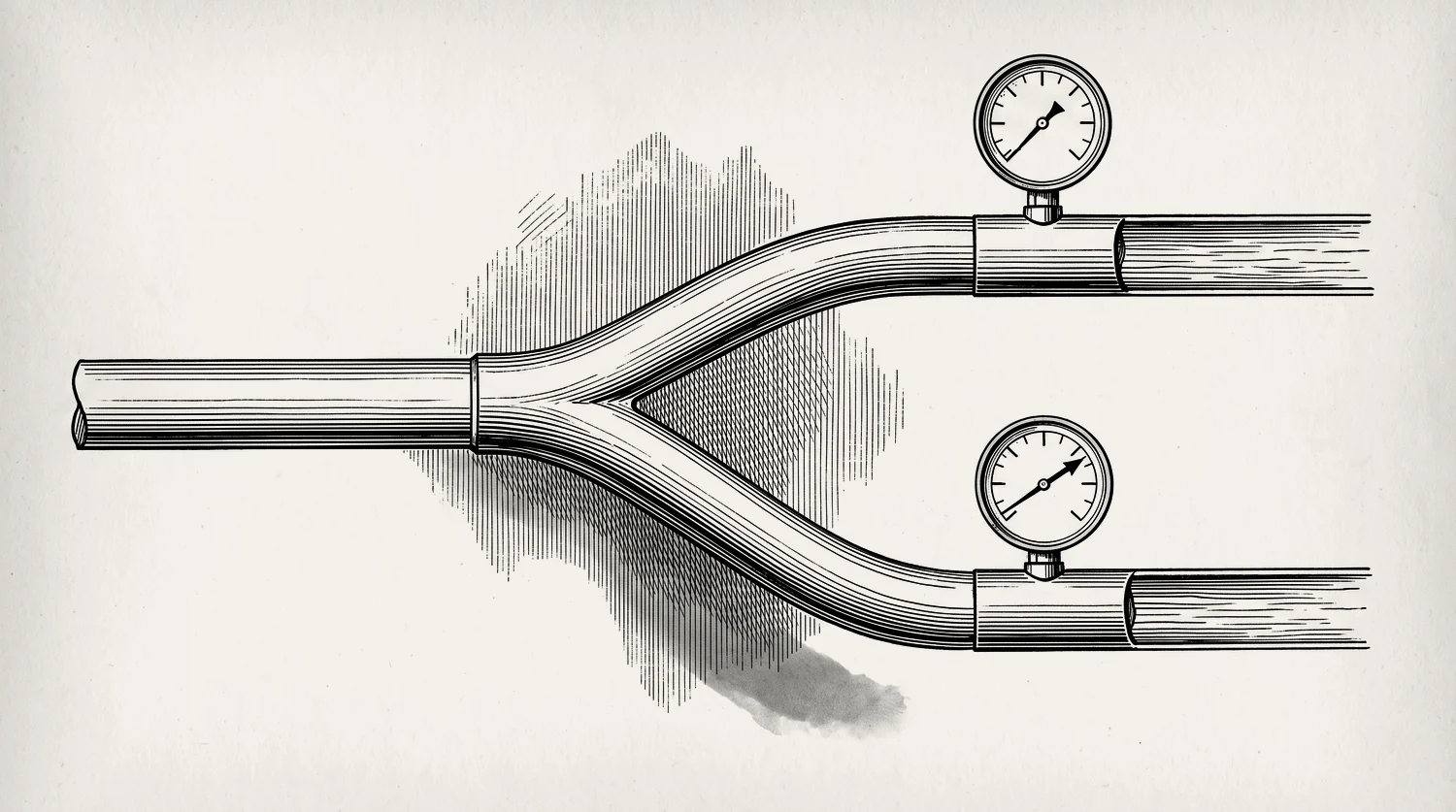
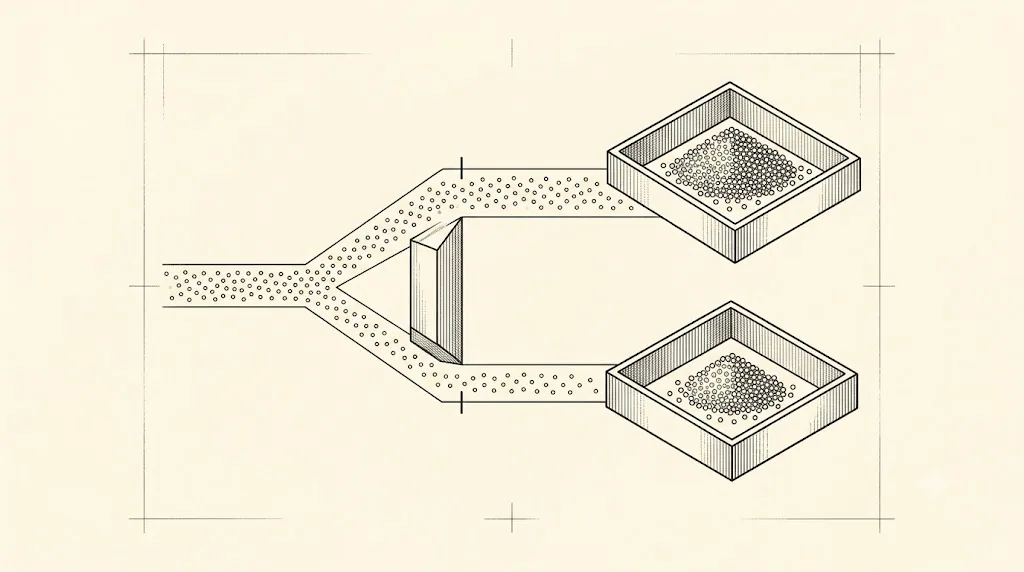
Most contractor accounts do not, and nobody tells you that before you start. An experiment splits your traffic in two. Each side gets about half your conversions. So the real question is not whether the feature works. It is whether your campaign books enough jobs for half of them to prove anything.
Our bar is simple. If the campaign is not producing at least 30 tracked conversions a month, do not run an experiment on it.
Here is the math behind that. At 30 conversions a month, a 50/50 split gives each side about 15. Google recommends at least 4 to 6 weeks, and discards the first 7 days for ramp-up. So a six week test leaves you calling a winner on roughly 20 conversions per side. That is enough to spot a difference the size of a truck. It is not enough to spot a small improvement, and small is what most real changes are worth.
Below that bar the experiment still finishes. It still shows you a winner. That is the trap. A result built on nine conversions against seven looks like an answer and is closer to a coin toss. Acting on it is worse than not testing, because now you have changed the account for no reason and you believe you had evidence.
Run the check before you build anything:
- Count tracked conversions in that one campaign over the last 30 days.
- If it is under 30, skip to the section below on what to do instead.
- If it is over 30, check that those conversions are real. Tracked calls that lasted long enough to be a conversation, forms that reached your inbox. A padded conversion count fails the test twice.
- If your booked jobs are not being fed back to Google at all, fix that first. Everything here judges leads instead of jobs until you close that loop.
What is a Google Ads experiment, and what does it split?
An experiment takes one campaign and copies it. Your change goes on the copy. Both then run at the same time, sharing the original campaign’s traffic and budget. Same weeks, same weather, same auction. Google reports the two sides against each other so you can see which one won.
That simultaneous part is the whole value. A change you make on Monday and judge in March is competing against the season, your competitors’ budgets, and whatever the weather did. An experiment removes all of that, because both versions live through the same conditions.
Custom experiments run on Search, Display, Video and Hotel campaigns. App and Shopping campaigns cannot use them.[1] Performance Max and Demand Gen have their own experiment types on the same page.
What do you do when your account is under the bar?
You test sequentially. One change, one long window, then compare the same length of time before and after. It is weaker than an experiment and it is honest about being weaker. Done with discipline it is still far better than changing five things in a week and guessing which one worked.
The method:
Now the weakness, stated plainly. A before-and-after test cannot separate your change from everything else that moved. A hailstorm, a competitor pausing their campaign, a seasonal dip in restoration work. You are measuring your change plus the world.
Three things reduce that:
- Only test changes big enough to beat the noise. A new bid strategy or a new landing page, not a headline tweak.
- Do not test across a season change. Testing an HVAC campaign from September into October measures the shoulder season, not your change.
- Use the rest of the account as a rough control. If your other campaigns moved the same way over the same weeks, the world moved, not your change.
That last one is the closest a small account gets to a control group, and it catches most false wins.
None of this method is hard. It is slow, and it is the first thing dropped in a busy month, which is the honest case for handing the account to someone who holds the testing discipline for you.
How do you set up a custom experiment?
Go to Experiments in the Campaigns menu, select the plus button, and choose Custom. Pick your campaign type, name the experiment, and choose the campaign you want to test against. Google then creates a copy for you to change. You edit the copy, not the original.
The settings that matter:
- Split at 50%. Google recommends 50% because it gives the best comparison between the two sides. On a low-volume account, giving the experiment a smaller share just makes a slow test slower.
- Choose your split method. Cookie-based is Google’s recommendation and means a given homeowner only ever sees one version. Search-based reassigns on every search, which Google says can reach a significant result faster. On a thin account, faster matters. On a landing page test, cookie-based is the honest one.
- Set a start and end date. Give it the full window before you look, not a week.
- Know the limit. You can schedule up to 5 experiments on a campaign, but only one runs at a time.[1]
One more setup note. If you are testing against an audience list with a cookie-based split, Google says you want at least 10,000 users in that list or the results get less accurate. Very few contractor remarketing lists are that big. See remarketing for home services before you build a test around one.
When the experiment wins, you can apply it to the original campaign or replace the original with it. When it loses, you end it and nothing about your live campaign has changed. That is the safety net that makes this worth doing at all.
How do you test AI Max before the September 2026 upgrade?
If your Search campaign uses automatically created assets or campaign-level broad match, it is in scope for the AI Max upgrade in September 2026. You can find out how it performs on your account before that date, or you can find out afterwards. An experiment is how you pick the first option.
Search campaigns have a one-click AI Max experiment. It does not build a copy of your campaign. It splits the campaign you already have, 50/50, which collects a result faster than a custom experiment does.[1] That speed matters here, because you have weeks, not quarters.
Judge it on the same number as everything else. Cost per booked job, over the full window, not cost per lead and not volume. AI Max reaches searches your keywords do not, so volume going up is the expected outcome and proves nothing on its own. What you are looking for is whether those extra searches booked work. The search terms view for AI Max shows which searches it found and which page it sent them to. Read that view weekly for the whole test: the search terms report.
If your campaign is under the volume bar, do not force an experiment onto this. Turn AI Max on deliberately on your best-tracked campaign, note the date, and run the sequential before-and-after above with a 60 day window. You will get a rougher answer than the experiment gives, and you will still get it before the deadline. There is more on the AI Max setting itself.
How long should an experiment run, and how do you call the winner?
At least 4 to 6 weeks, and longer if your conversions arrive slowly. Google’s own guidance is to wait for one or two full conversion cycles, and it discards the first 7 days to allow for ramp-up. So a four week experiment is really three weeks of usable evidence, which is why we run six.
A conversion cycle is not the same in every trade. A blocked drain converts in an hour. A whole-home window replacement can take a homeowner three weeks of thinking and two quotes. Match the window to how your customers actually buy, not to how fast you want an answer. That slow cycle is also why windows and doors campaigns need targets of their own.
Calling it:
- Do not peek and act. Looking is fine. Ending the test in week two because one side pulled ahead is how you buy a coin toss.
- Read the significance indicator, then read the conversion counts anyway. Twelve against nine is not a result, whichever way the indicator points.
- An inconclusive result is still an answer. It means the change was not big enough to matter on your volume. Google’s own advice for inconclusive results is more volume and a longer run. On a contractor account, the honest read is usually that the change was not worth making.
- Judge on booked jobs. A winning side with a lower cost per lead and a worse cost per booked job lost. That distinction is the whole point of judging on money metrics instead of vanity ones.
What should you not use an experiment for?
Do not use one to test ad copy. Ad variations are a separate tool built for exactly that, and writing the variants is its own skill with its own rules. That lives at ad copy examples for home services. Sending a headline test through a full campaign experiment wastes six weeks of traffic on something you could answer faster.
Four more things to keep out of an experiment:
- Two changes at once. You will get a winner and no idea which change made it win.
- Your only source of emergency calls. If the experiment side is worse, half your 3am burst pipe traffic saw the worse version for six weeks. Test on a campaign you can afford to have half-broken.
- Anything before your tracking is right. A test measured on broken conversions gives you a confident wrong answer. Fix conversion tracking first.
- A change you would not roll out anyway. If the answer is no regardless of the result, you are doing homework, not testing.
And if the account is brand new, do not test at all yet. The first 90 days are for building a clean base and getting real conversion data flowing. Splitting thin traffic in two comes later: your first 90 days on Google Ads.
Stop reading · start fixingSee where your pipeline is leaking.Free 15-minute Leak Finder. We pull up your numbers, name your biggest leak, and hand you a 90-day plan. No sales script, no hard close.Find My Google Ads LeaksFAQ
How long should a Google Ads experiment run? At least 4 to 6 weeks, and longer if your conversions come in slowly. Google discards the first 7 days for ramp-up, so a four week test is closer to three weeks of evidence. Match the window to how long your customers take to buy. Emergency plumbing converts in hours, whole-home windows in weeks.
How many conversions do I need for a Google Ads experiment? There is no official minimum. Our bar is 30 tracked conversions a month in the campaign you are testing, because a 50/50 split leaves each side with about half of that. Under 30, run a sequential before-and-after test instead and give it 60 days.
What is the difference between drafts and experiments? They live on the same screen. You make your change on a copy of the campaign, then run it as an experiment against the original on a share of the traffic. If you are hunting for a menu item called drafts and experiments, it is Experiments in the Campaigns menu.
Can I run more than one experiment on a campaign at a time? No. You can schedule up to 5 experiments for a campaign, but only one runs at a time.[1] That is a useful limit. Two live experiments on the same campaign would split your traffic three ways and neither would reach a result.
What is a good experiment split percentage? 50%. Google recommends it because an even split gives the cleanest comparison between the two sides. Giving your experiment 20% of the traffic feels safer and just means waiting five times as long for an answer you can trust.
Should I test AI Max with an experiment? Yes, if your Search campaign uses automatically created assets or campaign-level broad match, since it is in scope for the September 2026 upgrade. The one-click AI Max experiment splits your existing campaign 50/50. Judge it on cost per booked job, not on the extra volume it brings.


